1-800-586-5412
Mon - Fri 8am - 5pm PST

0 $0.00
items in your cartto quote Checkout
Ooops no items were found.
Try something else.
Ok
Loading…

Bulk vs. Microbulk Gas Systems: Which Is Right for Your Business?

Bulk vs. Microbulk Gas Systems: Which Is Right for Your Business? Bulk vs. Microbulk Gas Systems: Which Is Right for Your Business?

Bulk vs. Microbulk Gas Systems: Which Is Right for Your Business?

If your business goes through argon, CO2, nitrogen, or oxygen every week, at some point you'll outgrow individual cylinders. The question becomes: do you need a traditional bulk system, or is microbulk the better fit? Here's how to think about it.

The problem with cylinder-only supply

Cylinders work fine at low volume, but as usage grows they create three recurring headaches:

  • Run-out risk. Someone has to track usage and reorder before a cylinder goes empty — and it's easy to lose track during a busy week.
  • Handling time. Swapping cylinders, tracking empties versus fulls, and coordinating deliveries all add up to labor hours that don't show up on an invoice but absolutely show up in your schedule.
  • Storage and safety. More cylinders on-site means more chained, secured, properly ventilated storage to manage.

Once a business is going through gas fast enough that cylinder swaps become a weekly (or more frequent) task, it might be time to look at a bulk or microbulk solution.

What's the difference?

Bulk systems are large stationary tanks, typically installed for higher-volume users — manufacturing plants, breweries, large food processors, or facilities with continuous or high-flow gas demands. They're fed by dedicated tanker trucks and sized to each facility's draw.

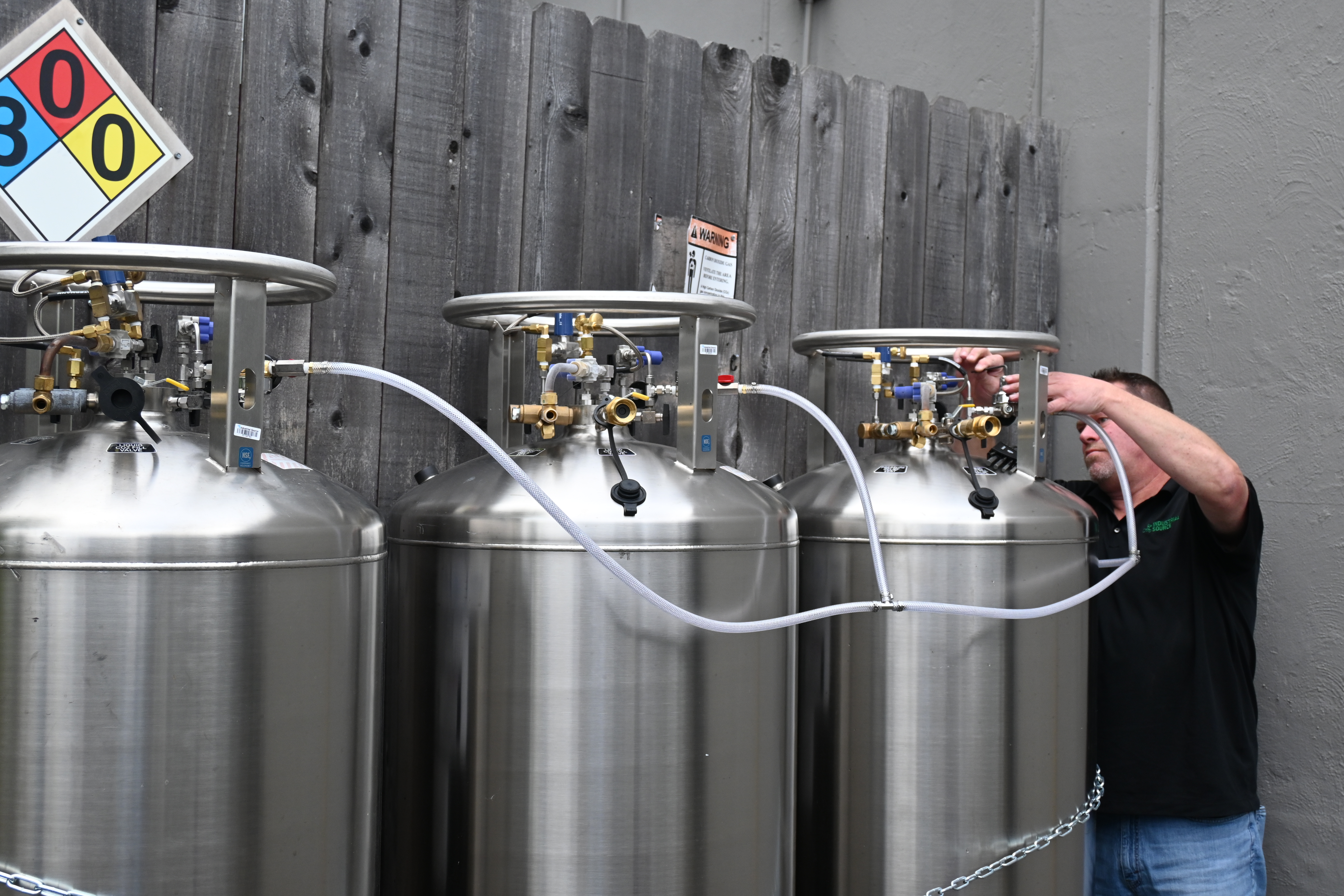
Microbulk systems are a smaller-footprint version of the same idea — a compact, permanently installed tank designed for businesses that use more gas than cylinders can efficiently supply, but not quite enough to justify a full bulk installation. Microbulk is common in restaurants, breweries, wineries, grow operations, and mid-size manufacturers.

Both approaches eliminate the cylinder shuffle. The right one for you comes down to volume, available space, and how your usage fluctuates seasonally.

Why telemetry matters more than the tank size

The single biggest advantage of a modern bulk or microbulk installation isn't the tank — it's the monitoring. At Industrial Source, every bulk tank we install includes telemetry that tracks your tank level remotely. That means:

  • We see your usage trends and can schedule refills proactively, before you're running low.
  • You're not the one responsible for checking gauges or guessing when to call.
  • Deliveries get routed more efficiently, which keeps costs predictable.

For a winery gearing up for harvest, a brewery running back-to-back batches, or a grow operation that can't afford a CO2 gap during flowering, that proactive visibility is often worth more than the tank upgrade itself.

What to weigh when deciding

A few questions can point your business toward the right system:

  1. How much gas do you use per week or month, and how consistent is that number? Seasonal spikes (harvest, summer beverage demand, holiday production runs) matter as much as your average.
  2. How much space do you have, and where can a tank realistically be sited relative to your building and local fire code setback requirements?
  3. What's your downtime tolerance? If a gas interruption stops production outright, the reliability of a monitored bulk system is worth more than the incremental cost.
  4. Do you need more than one gas type? Some facilities run bulk CO2 alongside microbulk nitrogen or argon — it doesn't have to be all-or-nothing.

Making the switch

Moving from cylinders to bulk or microbulk isn't an overnight decision, and it shouldn't be — it involves site evaluation, permitting, and installation. That's exactly why it helps to work with a supplier who handles the whole process rather than just dropping off a tank.

Industrial Source owns and operates our own fleet of bulk tanker trucks, installs and maintains the systems we sell, and monitors every tank we install so our customers aren't the ones watching the gauge. Whether you're a growing brewery outgrowing cylinders or a manufacturer looking to eliminate supply interruptions altogether, we can help you figure out which system actually fits your operation — not just sell you the biggest tank available.


Curious whether bulk or microbulk makes sense for your business?
Schedule your free bulk or microbulk consultation with Industrial Source here. 

Bulk vs. Microbulk Gas Systems: Which Is Right for Your Business?

Bulk vs. Microbulk Gas Systems: Which Is Right for Your Business? Bulk vs. Microbulk Gas Systems: Which Is Right for Your Business?

Bulk vs. Microbulk Gas Systems: Which Is Right for Your Business?

If your business goes through argon, CO2, nitrogen, or oxygen every week, at some point you'll outgrow individual cylinders. The question becomes: do you need a traditional bulk system, or is microbulk the better fit? Here's how to think about it.

The problem with cylinder-only supply

Cylinders work fine at low volume, but as usage grows they create three recurring headaches:

  • Run-out risk. Someone has to track usage and reorder before a cylinder goes empty — and it's easy to lose track during a busy week.
  • Handling time. Swapping cylinders, tracking empties versus fulls, and coordinating deliveries all add up to labor hours that don't show up on an invoice but absolutely show up in your schedule.
  • Storage and safety. More cylinders on-site means more chained, secured, properly ventilated storage to manage.

Once a business is going through gas fast enough that cylinder swaps become a weekly (or more frequent) task, it might be time to look at a bulk or microbulk solution.

What's the difference?

Bulk systems are large stationary tanks, typically installed for higher-volume users — manufacturing plants, breweries, large food processors, or facilities with continuous or high-flow gas demands. They're fed by dedicated tanker trucks and sized to each facility's draw.

Microbulk systems are a smaller-footprint version of the same idea — a compact, permanently installed tank designed for businesses that use more gas than cylinders can efficiently supply, but not quite enough to justify a full bulk installation. Microbulk is common in restaurants, breweries, wineries, grow operations, and mid-size manufacturers.

Both approaches eliminate the cylinder shuffle. The right one for you comes down to volume, available space, and how your usage fluctuates seasonally.

Why telemetry matters more than the tank size

The single biggest advantage of a modern bulk or microbulk installation isn't the tank — it's the monitoring. At Industrial Source, every bulk tank we install includes telemetry that tracks your tank level remotely. That means:

  • We see your usage trends and can schedule refills proactively, before you're running low.
  • You're not the one responsible for checking gauges or guessing when to call.
  • Deliveries get routed more efficiently, which keeps costs predictable.

For a winery gearing up for harvest, a brewery running back-to-back batches, or a grow operation that can't afford a CO2 gap during flowering, that proactive visibility is often worth more than the tank upgrade itself.

What to weigh when deciding

A few questions can point your business toward the right system:

  1. How much gas do you use per week or month, and how consistent is that number? Seasonal spikes (harvest, summer beverage demand, holiday production runs) matter as much as your average.
  2. How much space do you have, and where can a tank realistically be sited relative to your building and local fire code setback requirements?
  3. What's your downtime tolerance? If a gas interruption stops production outright, the reliability of a monitored bulk system is worth more than the incremental cost.
  4. Do you need more than one gas type? Some facilities run bulk CO2 alongside microbulk nitrogen or argon — it doesn't have to be all-or-nothing.

Making the switch

Moving from cylinders to bulk or microbulk isn't an overnight decision, and it shouldn't be — it involves site evaluation, permitting, and installation. That's exactly why it helps to work with a supplier who handles the whole process rather than just dropping off a tank.

Industrial Source owns and operates our own fleet of bulk tanker trucks, installs and maintains the systems we sell, and monitors every tank we install so our customers aren't the ones watching the gauge. Whether you're a growing brewery outgrowing cylinders or a manufacturer looking to eliminate supply interruptions altogether, we can help you figure out which system actually fits your operation — not just sell you the biggest tank available.


Curious whether bulk or microbulk makes sense for your business?
Schedule your free bulk or microbulk consultation with Industrial Source here. 

SEARCH ×